

I saw a weight loss influencer’s reel last week that stopped me mid-scroll. You know the format - split screen showing two versions of a woman, comparing their daily choices.
The “struggling” version avoids dairy because inflammation, skips eggs because cholesterol, drinks orange juice because it’s natural. The “winning” version eats Greek yoghurt for protein, has eggs at breakfast, drinks coffee black.
The point was clear: stop following health trends and focus on protein-rich meals that don’t spike your blood sugar.
And look, I get it. The reel makes a valid point about protein and blood sugar management.
But several of the “health-driven” woman’s concerns were also valid. Dairy can be inflammatory for some people. Red meat consumption in large amounts has been linked to certain cancers. These aren’t just made-up problems.
This is the paradox that drives everyone crazy about nutrition. We’re all searching for the one absolute truth. Is dairy good for me or not? Should I eat oatmeal or not?
When I started studying nutrition, I walked in expecting exactly that - clear answers. One right diet. Definitive guidance on everything.
Turns out, there isn’t one. And expecting to find it sets you up for constant confusion and frustration.
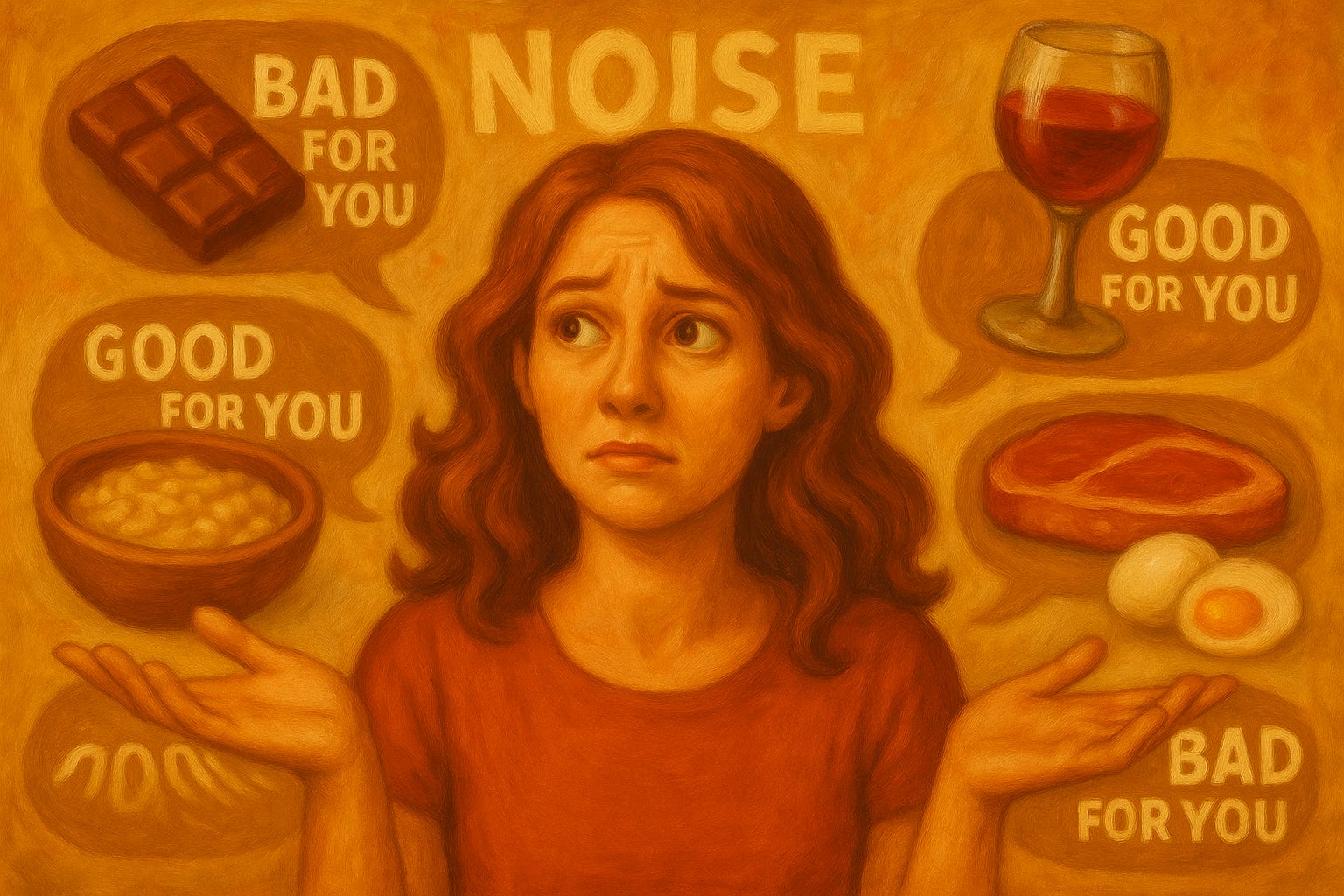
The Reality: Science Won’t Give You Simple Answers
Science is nuanced. Each body is different. Context matters enormously.
This is actually why I fell in love with personalised nutrition during my studies. Different people have different genetics, different susceptibility to various foods, their own individual sensitivities. We are genuinely not all the same in how we process and respond to nutrients.
What we do have are sort of “tipping points” where enough cumulative evidence amounts to clear recommendations. Things like the importance of protein consumption for muscle maintenance. That smoking is definitively bad for you. That the Mediterranean diet consistently shows beneficial health outcomes across populations. Some things have been demonstrated in studies again and again, across different populations and contexts, that they amount to one generally accepted truth - at least so far, until future discoveries potentially tell us otherwise.
But many other nutrition questions are correct only in context. Dairy or gluten might have less than ideal effects on you if you’re allergic, sensitive, or intolerant. But for most people they’re a nutritious and enjoyable food source. Research shows us that two alternative diets can be equally effective in achieving weight loss, but one might be more beneficial for blood pressure and cholesterol whilst the other isn’t.
I know that’s not what you want to hear. It would be so much easier if someone could just hand us a list of “always eat this” and “never eat that.” But the truth is that most nutrition questions don’t have a single answer.
So how do we approach various claims? Where do you start thinking about what’s right for you?
Start With Your Goal
When you see a nutrition claim - whether it’s on Instagram, in a research study, or from your doctor - ask yourself what you’re actually trying to achieve through this nutrition choice.
Are you optimising for longevity, meaning living as long as possible in good health? Are you focused on performance, wanting to achieve the best athletic outcomes, be the fastest or strongest? Are you pursuing weight loss - and if so, are you after the quickest results, the most dramatic transformation, or something actually doable and maintainable? Or are you simply aiming to be healthier and feel better day-to-day?
These goals seem like they should converge, but research shows they often don’t. Extreme calorie restriction, for instance, has shown lifespan extension in some animal studies, but it doesn’t help you function well as a human living your actual life today. What optimises for one goal might not serve another equally well.
Take intermittent fasting as an example. If you’re asking “is intermittent fasting good for me?”, the answer depends entirely on what you’re trying to achieve. Research shows it can improve insulin sensitivity and support autophagy (the body’s cellular cleanup process), which are beneficial for metabolic health and potentially longevity. But if you’re a perimenopausal woman already dealing with disrupted cortisol patterns and trying to build muscle, extended fasting periods might actually work against you by elevating stress hormones and making it harder to get adequate protein for muscle maintenance. Same intervention, completely different outcomes depending on who you are and what you’re optimising for.
So when you see a claim about a food or strategy and you’re wondering if it applies to you, ask yourself: this suggested strategy is great for what? In what cases might it be harmful? Through which lens am I looking at this, and through which lens is the person making the claim looking at this?
Who You Are Matters
A woman in menopause needs different nutrition support than a pregnant woman. Someone training for a marathon has different requirements than someone managing an autoimmune condition.
This goes deeper than life stage. Your genetic makeup creates personalised variation in how you process nutrients. Some people need more of certain nutrients to support their genetic pathways. Others need less. One size genuinely doesn’t fit all.
Two Things Can Work Equally Well - What Works Better for You?
We have solid evidence that both high-carb, low-fat diets and high-fat, low-carb diets can lead to equal success in weight loss. One is not inherently better than the other. Our body is a dual-engine machine that’s highly adaptive to various dietary approaches. Both can work equally well.
Which means instead of asking yourself “which diet is better?” or “what should I be eating to lose weight?”, the better questions become: What can I sustain long-term? What do I actually enjoy more? If I extend the framework beyond just weight loss, what am I potentially missing by choosing one approach over another - fibre, protein, certain micronutrients? If I’m perimenopausal, which nutritional choices can better support my hormonal shifts? How does this align with my specific goals?
The All-Or-Nothing Problem
Most nutrition content you see online is presented as black and white because nuanced discussions don’t grab attention in a three-second scroll.
“Cortisol is making you fat” gets more engagement than “cortisol functions in complex ways and under certain circumstances might impact your weight loss efforts.”
It’s not that the simple version is a lie. It’s just not the whole story and, well, it depends.
To position themselves competitively, creators often discount other valid claims entirely. They pick one angle and make it the be-all-end-all of nutrition. But our body is a complex system. Most health outcomes are multifactorial - meaning multiple factors contribute to them. Reducing everything to one cause and one outcome, without acknowledging the context and complexity, creates false certainty.
Our bodies are also remarkably adaptive and flexible. Claims like “red meat consumption causes cancer” create unnecessary alarm and miss important nuance. What we actually have is statistical evidence that high consumption of processed and red meat is correlated with increased colorectal cancer risk. But correlation isn’t causation, dose matters enormously, preparation methods matter (grilled versus slow-cooked makes a difference), individual context matters, and many different dietary approaches can lead to good health outcomes.
Some things we know are clearly harmful - smoking, for instance. Others are dose-dependent, vary by person and situation, and exist in shades of grey. Meat can be an excellent source of complete protein, provide a variety of amino acids and nutrient density, and also show correlation with certain cancer risks when consumed in large amounts, particularly in processed forms. Both things can be true.
When Individual Context Overrides General Advice
Take the dairy and gluten example. Yes, they can be inflammatory. Yes, they can affect gut lining. For some people, removing them from their diets dramatically improves health, reduces inflammation, and can support fat loss.
Does that mean no one should eat dairy or gluten?
I don’t think so. Dairy provides protein, calcium, and various B vitamins. In yoghurt or kefir form, it’s fermented and supports your gut microbiome. In its whole form, it’s nutrient-dense and for most people, a wonderful food to include.
But if you’re experiencing specific symptoms or conditions where dairy triggers inflammation - maybe you notice bloating, skin issues, or digestive discomfort after consuming it - removing it might be exactly the right move for you.
The confusion happens when someone experiences benefits and immediately extrapolates: if it’s good for me, it’s good for everyone. Or if it caused problems for me, everyone should avoid it.
Neither is true. Which is why we have science and studies conducted in controlled situations, looking at statistically significant outcomes across populations. Are our methodologies perfect? Absolutely not. Research has limitations, and individual variation is real. But in the absence of a better alternative, this is our best approach for understanding general patterns whilst still acknowledging that you might be an exception to those patterns.
The Dose Makes the Poison (and the Medicine)
If a little is good, more isn’t automatically better.
Small amounts of nicotine have shown cognitive benefits in research studies examining focus and attention. That doesn’t mean you should start smoking - the harm from smoking vastly outweighs any potential cognitive benefit from nicotine. Fasting overnight (say, 12-14 hours between dinner and breakfast) can support metabolic health for many people by giving your digestive system a break and allowing insulin levels to normalise. That doesn’t mean fasting for three days straight will be even better as a regular practice for everyone.
Long-term or extended fasting has been linked to certain health benefits in specific research contexts - like its impact on cancer cell growth in particular laboratory or clinical situations. But those studies examining fasting’s effects on cancer cells didn’t simultaneously examine what extended fasting does to your thyroid hormones, cortisol levels, muscle building capacity, or overall wellbeing. All things you might be genuinely interested in preserving in your actual life, which might make long-term fasting a less than ideal choice for you, even if it shows promise in one specific area.
This is why the lens through which you’re looking at things matters. You can’t make broad decisions based on one isolated finding, or even five findings looking at one specific outcome.
The Headlines Reported in Media
“Chocolate is good for you - it has antioxidants!”
“Chocolate is bad for you - it spikes your blood sugar!”
“Wine is toxic - alcohol damages your body!”
“Wine is healthy - it’s full of polyphenols!”
All of these can be true simultaneously. Wine is made from grapes and contains beneficial compounds like resveratrol and various polyphenols that have antioxidant properties. The alcohol in it is also genuinely toxic to your liver and other organs and hard on your body’s systems. Both things exist at the same time.
The question then becomes about context. You can get those same antioxidants from better sources than wine - directly from grapes, berries, or other antioxidant-rich foods, without the toxicity of alcohol. But if you’re enjoying yourself at dinner with friends, having some wine with your meal might be contributing to your joy and social connection, and those are health factors too. The headline though distils things down to one claim that sells and attracts attention, but it’s not a foundation for making thoughtful health decisions.
Life Isn’t Only About Health Optimisation
Alcohol isn’t good for you. The evidence is pretty clear on that.
But if you’re on a date, celebrating something meaningful, and having a glass with dinner brings you genuine joy - the cost to your happiness and wellbeing from rigidly avoiding it might outweigh the minor health impact of an occasional drink.
If finishing eating early supports better digestion and health (which it does - giving your body time to digest before sleep supports better sleep quality and metabolic function), but doing so prevents you from having dinner with family or going out with friends consistently - well, loneliness and social isolation are more strongly correlated with reduced healthspan and earlier mortality than almost anything else we can measure.
When the goal is eating healthy most of the time, but rigidly avoiding treats makes you want them more and prevents any sustainable change - then yes, including sugar or other foods you enjoy from time to time actually serves your larger goal. Because sustainability matters more than perfection.
Some Things We Do Know Almost for Sure (For Now)
Some things have overwhelming evidence and well-understood mechanisms behind them.
Protein is essential for muscle building and maintenance - we understand the mechanism of how amino acids are used to repair and build muscle tissue, and study after study confirms that adequate protein intake supports muscle mass, especially as we age. The variety of plant sources supports gut microbiome health - we know that different types of fibre feed different beneficial bacteria in our gut, and diverse plant intake creates a more resilient, diverse microbiome. The importance of sleep for everything from hormone regulation to cognitive function to immune health is so well-established across thousands of studies that it’s about as close to settled science as we get. How blood sugar variation affects metabolic health, insulin sensitivity, and long-term diabetes risk is extremely well-documented and understood at a mechanistic level.
The research in these areas keeps growing. The mechanisms are understood. The evidence is strong enough to be genuinely useful across most populations.
But even then, how you choose to implement the scientific evidence and adapt it to your life is up to you.
A Better Framework
Instead of looking for strict rules about what to eat and avoid, I’d suggest treating nutrition knowledge as tools in your toolbox. Information that empowers you to make informed choices for your specific situation.
It’s not about never eating oatmeal because it spikes blood sugar. Oatmeal is excellent for many reasons - beyond being tasty, comforting and filling, it’s high in soluble fibre (particularly beta-glucan, which helps lower cholesterol), it provides sustained energy, it’s affordable and versatile, and it supports digestive health. It’s about understanding that adding fat (like nuts or nut butter) and protein (like Greek yoghurt or protein powder) to your oatmeal reduces the glucose spike by slowing digestion, and you can make that choice when it matters to you.
When you understand the mechanisms in your body, you can act on that knowledge. You don’t need someone else’s yes or no list. You need to be informed and empowered to make decisions that work for you.
How to Navigate Nutrition Claims (Without a Degree in Nutrition)
I suggest asking yourself these questions to cut through the noise:
What am I trying to achieve with my nutrition choices right now? What is my current goal, both overall and specifically? Am I optimising for weight loss, for feeling energetic, for managing symptoms, for longevity?
If this claim is true, is it true “for what”? What was actually tested in the research? What perspective or lens was used? Is this relevant to my situation and my goals?
What level of compromise or effort am I willing to make? Is this worth it for my specific goals? Can I sustain this approach long-term?
Do I understand why this recommendation exists - the actual mechanism behind it? Or am I taking it on faith without the details, which means it might not apply specifically to me and my goals?
When something is presented as all-or-nothing, that’s usually a red flag. The evidence is almost always more nuanced than that.
The Real Empowerment
You don’t need another diet plan or strict food rules.
You need to understand how your body works so you can make informed decisions that fit your life, your goals, and your individual circumstances.
That’s not the easy answer. It requires more thinking than just following a list. But it’s the only approach that creates long-term sustainability and puts you in control of your own health.
You’re smart enough to handle nuance. You’re capable of making these decisions for yourself. The goal isn’t to find someone who’ll tell you exactly what to eat. It’s to build your own judgement based on solid understanding.
That’s actual empowerment. Not another set of rules to follow.
This was puzzling to me for a long time. Slowly I am getting to the level to understand this but it is not easy to find out what works for you. It takes some discipline. But hey nobody ever said this was going to be easy