

This article is the second in a series of articles about weight medications. Read part 1 - here.
My initial reaction to GLP-1 medications was not a neutral one.
As someone training in nutritional therapy, who writes about a health-first approach to weight loss and believes deeply in what food and lifestyle can do for your health, my first instinct when these medications entered my awareness was suspicious antagonism. Who are these people willing to take on unknown risks and frightening side effects for the sake of losing weight? I know and have seen first hand that nutrition and lifestyle work - why would you go there?
That thought was mostly shaped by what I was reading in the media. The coverage of these medications, especially early on, oscillated between two extremes: miracle drug or source of all evil. From nausea and constipation on the mild end, all the way to blindness, thyroid cancer and pancreatic damage at the other - it read like a catalogue of horrors. The kind of list that makes you think: who would willingly do this to themselves? Why won’t they just try the ‘natural’ way?
That instinct made sense, but it didn’t hold up against everything I learned later having read hundreds of accounts of actual users’ lived experiences.
Because the reality is that many people have already tried everything, “natural” or otherwise. Diet after diet, year after year, losing weight and gaining it back, sometimes multiple times over. It often worked, but for many it never did and even for those who succeeded, it was a lifelong struggle. Not because they lacked information, willpower or commitment, but because for some people the biological cards are stacked in a way that makes sustained weight loss genuinely, extraordinarily difficult.
For anyone who have struggled with their weight or is still struggling (present company included) - you know that struggle is likely never going to go away. You might master the what and how, but it is likely part of who you are, for life.
Many people never really managed to conquer that hill, despite doing everything they are told to do. They are not taking the easy way out. They are already doing everything they can - nutrition, movement, lifestyls - all the things. Yet they still feel like they are failing, or at the very least struggling hard. These medications offer something that nothing else has. They make the journey doable. Maybe not easy and definitely not a magic pill, but suddenly possible. And that’s a very significant thing, or as one Reddit user memorably wrote after his first week on the medication: “what is this sorcery?!”
Costs aside, the main reason people avoid considering weight medications as an option is the fear of side effects, both short and long term.
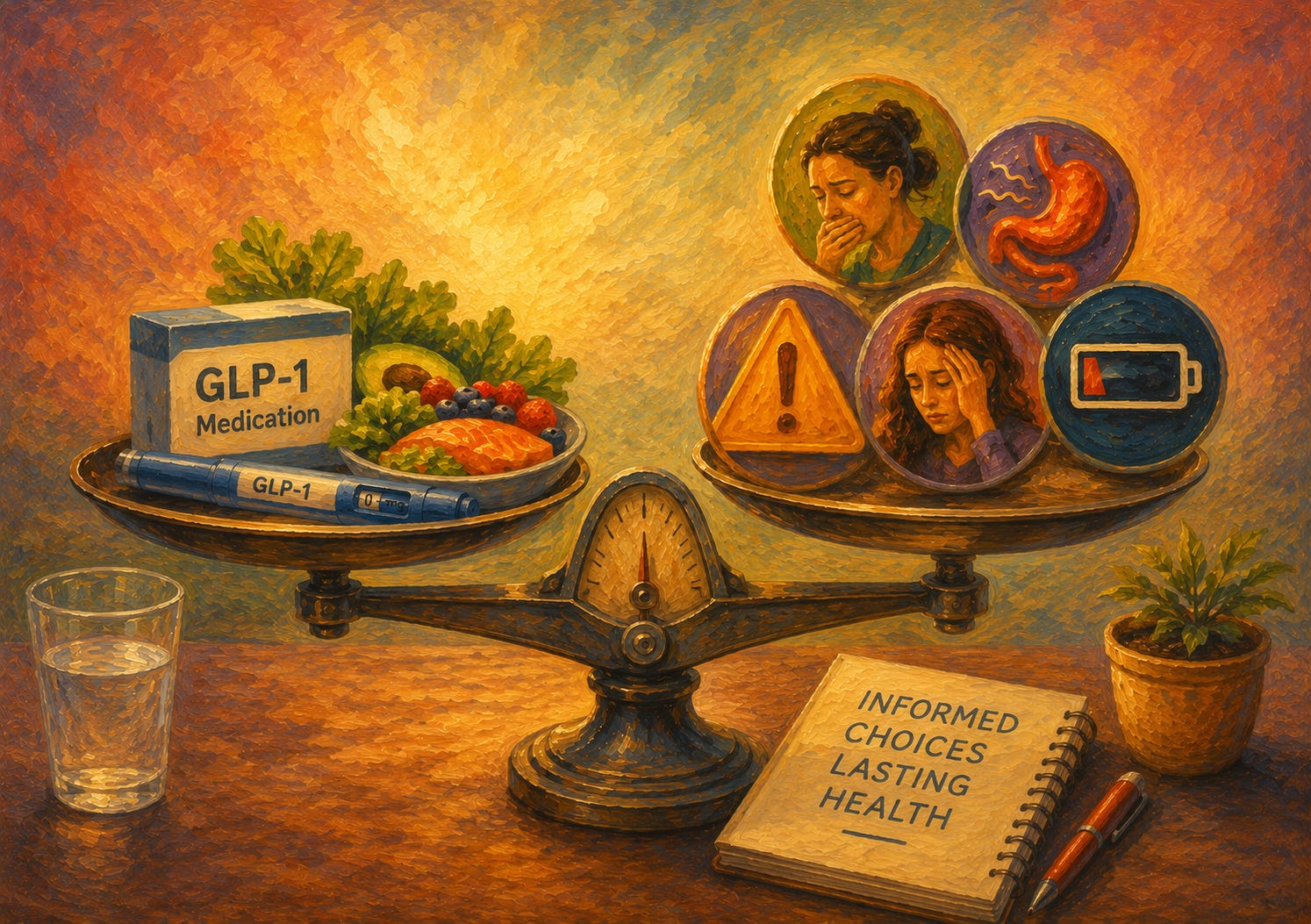
So in this post I want to give a more nuanced picture of what we actually know about side effects - why things are happening, what can be done about them, and where the picture is still not entirely clear. As before: not here to convince you either way, just to help you understand what you’re looking at.
Different people go through a different experience
Let’s start by acknowledging the enormous variability in how people experience these medications. Reading through user accounts you find every point on the spectrum. Some people report virtually no side effects, maybe some mild nausea in the first couple of weeks, then nothing. Others are so significantly affected and genuinely suffer, even at lower doses, that they stop taking the medication altogether. Most people are somewhere in between, experiencing some side effects, learning to manage them, finding their own balance over time.
There is no way of predicting what your experience will look like. The research tells us what’s possible, but it cannot tell you what your experience will be.
Some emerging research suggests genetics plays a role. Specific genetic variants have been associated with a higher likelihood of experiencing gastrointestinal side effects like nausea, reflux and digestive disruption, while others don’t. On the exact same dose one person can have no symptoms and another might struggle. It’s not mindset or tolerance, but likely your biological setup.
Three things that shape your side effect experience
Before going through what the side effects actually are, it helps to understand what determines how someone experiences them.
The first is dose - The higher the dose, the more likely you are to experience side effects and the more intense they tend to be. More medication means more receptor activation across more systems in the body. It also brings up a separate conversation about whether the standard dose escalating protocol, where patients start on a lower dose and move to increasingly higher doses at pre-determined intervals, is actually the right approach for everyone. More on that in a separate post.
The second is how you manage the process - these medications suppress appetite and at higher doses, can sometimes blunt thirst signals too. Thirst and hunger are regulated by overlapping circuits in the hypothalamus (an area in the brain) and some research suggests these medications may suppress the drive to drink water independently of their effect on food intake. The same signal that’s telling you you’re full is, to some extent, also telling you you’re not thirsty.
As you eat and drink less, your body gets less of what it needs: nutrients, hydration, protein, fibre. The medications also slow gastric emptying, meaning food spends longer in the stomach before moving into the intestines, creating knock-on effects like constipation, reflux or nausea. But many of these aren’t the medication doing something to you - they’re your body responding to what’s happening to it. If you actively counter them, many reduce significantly or disappear.
The third is the speed of weight loss - When a lot of weight drops very quickly, the body adapts by conserving energy and prioritising essential functions (and deprioritising what’s less essential for survival). This produces effects that look like side effects of the medication, but are really just the body reacting to the rapid change in weight, the same way it would have reacted to any form of rapid weight loss. Slower, more supported weight loss produces far fewer of these knock-on effects.
Understanding these three levers changes how you read the list of side effects. A lot of what gets attributed to the drug is actually attributable to how it’s being used. Having said that, these medications do have side effects that are directly drug-related.
Newer research increasingly shows outcomes that can't simply be explained by how weight loss is managed. Reading through enough user accounts you find plenty of anacdotal evidence of side effects happening despite people supposedly doing everything right: adequate nutrition, slower weight loss, all the recommended steps. There is still a lot we don’t fully understand about what these medications are doing in the body and i will touch on that later.
What’s common and why
The gastrointestinal side effects: nausea, constipation, reflux, diarrhea - are the most widely reported, and they share a common cause. The medications slow gastric emptying and can slow movement through parts of the digestive tract. Food moves more slowly through the stomach and gut, which is part of how they create satiety, but also what disrupts normal digestive rhythm.
Nausea affects somewhere between 20-50% of people, with a broadly similar range across both semaglutide and tirzepatide, depending on the study and dose. It’s usually worst at the start and when doses go up, then eases as the body adjusts within a few weeks at each level. Two mechanisms are at play: the slowed gastric emptying and direct activation of GLP-1 receptors in the part of the brain that controls nausea. Because both are involved, dietary adjustments help but don’t eliminate it for everyone. GI side effects are one of the most common reasons people stop taking these medications altogether.
Constipation affects roughly one in five users and follows the same logic - slower gut motility plus less food and fluid going in leads to stool drying out. The same things that help with constipation off medications, work here too: more fibre, more water, movement. Psyllium husk is one of the best-evidenced options. The challenge is that on suppressed appetite, getting enough of any of these consistently requires real planning and paying attention to what you eat.
Fatigue comes up frequently in user accounts, often as one of the more troublesome day-to-day effects - yet it barely registers in clinical trial data. Some is explained by reduced calorie intake, some by changes in dopamine signalling, some may relate to peak drug concentration in the days following injection. There’s also a component that isn’t fully explained yet. Most people say it improves over time.
Hair loss generates a lot of anxiety but not all hair loss is a result of the same cause. Some is a biological response to rapid weight loss - hair follicles going into a resting phase and shedding months later, which happens after any significant weight loss (on medications or not) and typically resolves. Some is nutritional deficiency from not eating enough protein, iron and zinc, which is largely preventable with proper attention to what you eat. But emerging evidence suggests there may be a third category - effects on the hair follicle cycle that don’t yet seem fully explained by weight loss or nutritional deficiency. They show up even in people losing modest amounts of weight slowly and eating well. Clinical trials consistently show hair loss rates two to five times higher than placebo. If you read enough user accounts on Reddit you’ll see it again and again: people who didn’t lose much weight, lost it slowly, claim to have eaten adequately, and still lost significant amounts of hair. Some hair loss is preventable, some resolves on its own, and some is still genuinely unexplained.
Other common side effects that get mentioned often, are: headaches, mild injection site reactions, burps or heartburn, and an increase in resting heart rate or heart palpitations.
When it’s not (only) the drug, it’s how you go about losing weight
The headlines about ozempic face and ozempic butt, the gaunt look and muscle loss - while real, are partly a function of how the weight loss is being done rather than an inevitable consequence of the medication. When the body is in caloric restriction, it is looking to create available energy by breaking down both fat and muscle. To maintain muscle mass, research tells us we need an adequate amount of protein and to challenge, break and build our muscles through resistance training.
The problem with these medications is they can suppress appetite so effectively that people don’t eat enough protein and stop exercising - either because nobody told them they needed to or because the weight is coming off anyway so why bother.
Lean mass loss does happen - research suggests roughly 25-40% of weight lost on these medications is lean mass rather than fat. But that proportion isn’t unique to GLP-1 medications, it’s broadly what happens with any significant caloric restriction. Adequate protein combined with resistance training substantially reduces the risk.
Gallstones are another example of a combined effect of both the medications and the weight loss itself. When you lose weight quickly, the body breaks down stored fat rapidly to generate energy. Bile is a fluid the liver makes to help digest fat or fatty acids. It is made partly from cholesterol, which dissolves in it. When the body breaks down stored body fat for energy, during rapid weight loss, the liver in an attempt to process the surge in fatty acids, releases more cholesterol into bile than the mixture can keep dissolved, so it starts forming crystals instead of staying liquid. This happens with any rapid weight loss - people who lose weight quickly through bariatric surgery develop gallstones at almost double the rate GLP-1 users do, which tells you something about how much of this is speed of weight loss rather than the drug itself.
The drug adds a second layer: GLP-1 medications appear to reduce the signalling that tells the gallbladder to contract and release bile, so bile sits stagnant for longer, becoming more concentrated. In clinical trials around 2-3% of people develop gallbladder issues, roughly double the general population rate, with risk highest in the first year. In more serious cases it can mean having the gallbladder removed.
Bone density is another area worth paying attention to. Our bones are constantly being broken down and rebuilt - it’s an ongoing process that keeps them strong. Two things can disrupt that balance during GLP-1-driven weight loss.
The first is the weight loss itself. Bones respond to load - the more weight they carry, the stronger they stay. As the weight comes off, that stimulus reduces, and so does the signal to keep rebuilding.
The second is less clear. A randomised trial found that a year of semaglutide reduced hip and lumbar spine bone density compared to people not taking it, with bone breakdown happening without a matching increase in rebuilding. Whether that’s the drug doing something directly, or simply a consequence of losing weight quickly, isn’t yet fully understood.
What is clear from the research: people who did structured exercise alongside the medication maintained their bone density. Those who didn’t, didn’t. Which is another reason exercise on these medications is a must.
The thing most people don’t realise going in is that being on these medications actually requires more attention to what you’re doing, not less. When you’re barely hungry, it’s easy to barely eat and as a result to not eat enough of what your body needs. Every bite matters more, not less, because there are fewer of them. You still need to move, to excercise, to build and maintain muscle, to pay attention to how fast the weight is coming off. The medication takes care of the hunger, but it doesn’t take care of everything else.
Sadly some people seem to think that once they’re on the medication, they no longer need to worry about diet, exercise, or other aspects of health. As the weight comes off, it creates the impression that the goal is being achieved, without all the effort that was required to achieve it before. The reality is that for long-term health, ease of maintenance and so much more, this is exactly the time to focus on what you’re eating, on making sure it supports your body, on exercising and on putting your health first as you lose the weight.
It’s also a great time to examine and improve your relationship with food. Taking advantage of the sudden peace around food and the fact that things feel easier, to inspect how you eat and change any habits that no longer serve you, introducing better ones instead.
The rarer, scarier effects
These are the effects that make headlines, the ones no one wants to encounter. They’re significant enough for people to name them as the reason to avoid these medications.
Pancreatitis is inflammation of the pancreas. The pancreas has two functions: it produces insulin and glucagon to regulate blood sugar (the part GLP-1 medications target directly) and it produces digestive enzymes that travel through a network of small ducts into the small intestine to help digest food. GLP-1 receptors sit on both the insulin-producing cells and the cells lining those small ducts. Several mechanisms have been proposed to explain how these medications might contribute to pancreatitis in susceptible people, although none has been conclusively established. One hypothesis is that prolonged receptor stimulation may alter the cells lining these ducts in ways that affect how digestive enzymes move through the pancreas. Another is that delayed gastric emptying changes pressure dynamics in the upper digestive tract, which may compound existing risk in people who already have gallstones or very high triglycerides.
The actual incidence of pacreatitis is low. Early trials suggested a slight increase in risk, but larger analyses across tens of thousands of patients haven’t confirmed a meaningful increase compared to placebo. Real-world case reports still occur, and doctors tend to be cautious especially in the first six months. For people with a history of pancreatitis caused by very high triglycerides, GLP-1 medications may actually reduce recurrence risk, because they lower triglycerides. The same drug can carry a different risk profile depending on your individual history.
Gastroparesis - or stomach paralysis, is a more severe relative of everyday constipation and slow digestion. With gastroparesis, the stomach muscles stop contracting properly, so food can sit in the stomach far longer than normal. In severe cases it can mean weeks of vomiting, dehydration, oesophageal damage, and in rare instances a build-up of undigested material requiring medical intervention. In the general population it’s considered rare. Delayed gastric emptying is common on GLP-1 medications, but true gastroparesis, which is usually confirmed through specific testing rather than symptoms alone, is still uncommon. People with diabetes and pre-existing nerve damage are at higher risk. The reassuring part is that it’s generally reversible when the dose is lowered or when you stop taking the medication.
Thyroid cancer - concerns started with animal studies showing GLP-1 receptor activation caused thyroid tumours in rodents, which led to the FDA black box warning (the strongest warning the FDA requires on a medication’s label) and to the recommendation that anyone with a personal or family history of medullary thyroid carcinoma or MEN2 syndrome needs to avoid these medications. GLP-1 receptors aren’t expressed in normal human thyroid tissue the way they are in rodents, so the animal finding doesn’t translate directly. The human evidence is mixed: large clinical trial analyses have generally found no association, while some observational studies have found elevated signals with longer duration of medication use. Bottom line - we don’t have the full picture yet.
Vision loss - specifically a condition called NAION, received a lot of attention due to its severity and the volume of lawsuits filed over it. Thousands are pending against Novo Nordisk and Eli Lilly in the US (GLP-1s manufcaturers), claiming the companies failed to adequately warn patients and doctors about the risks. NAION is a sudden interruption of blood flow to the optic nerve, causing permanent vision loss that can’t be reversed - definitely a fear inducing outcome. A study from Harvard published in 2024 found diabetic patients on semaglutide were over four times more likely to develop it, and people taking it for weight loss appeared at even higher risk. That finding came from a small specialised clinic population, and the picture has gotten even more unclear since - a large international study found no clear increase, a Danish study of over 400,000 people found a doubling of risk in diabetes patients specifically, and a more recent review found a smaller, less certain increase overall with no statistically significant risk for weight loss use specifically. The European Medicines Agency opened a formal safety review in early 2025. The absolute numbers are small, but because vision loss is permanent, the potential for harm is significant, especially if you have pre-existing risk factors like sleep apnoea, cardiovascular disease or diabetes.
Putting it in perspective
When we talk about these side effects as though they exist in isolation, we lose perspective on what risk actually means in medicine.
Ibuprofen, a painkiller most of us take without a second thought, increases the risk of serious gastrointestinal bleeding two to three fold in regular users, causes stomach ulcers in 1-4% of people who take it long term, and can cause kidney damage within days in people who are dehydrated or over 60. Nobody writes alarming media features about it.
Statins, cholesterol-lowering medications taken daily by tens of millions for years or decades, cause muscle pain in roughly 1 in 10 people, and rarely this can progress to a breakdown of muscle tissue that can cause kidney failure and, in some cases, death. Yet you don’t hear people discuss the risk of statins at the pub.
Our perception of risk is shaped by novelty, attention and the cultural narrative around us, more than it is shaped by actual data. A new medication taken by millions of people, connected to weight loss, a subject already loaded with moral judgement, will attract scrutiny that medications embedded in everyday life for decades usually don’t.
I am not trying to say it shouldn’t get this scrutiny, but without paying attention to the context, it can very easily distort our views and influence our decisions.
The question is not whether a medication carries any risk, because every medication does. The question is whether the risks, when properly understood and disclosed, are proportionate to the benefits for a specific person, in a specific situation.
The question at the heart of all of this is simply: is it worth it for me? And that answer will be different for someone who is generally healthy and would like to lose a few kilos, versus someone whose weight is affecting their health, their sleep, their joints, their confidence, their ability to move through daily life.
That conversation belongs between a patient and their doctor and it’s an incredibly individual one. It involves aspects that are purely medical, but also, I’d argue, quality of life, how someone feels about themselves, and what change taking the medication might bring to their life compared to the risks. This is a conversation that very few people actually have before starting on GLP-1s.

There is a lot we don’t know
The GLP-1 drug class has been around for approximately 20 years. Semaglutide specifically has been in use for close to a decade. Enormous numbers of people are taking these medications as I write this, generating real-world data at a scale and speed that is truly unusual in medicine.
But there is still a lot we don’t know. We still don’t know all the effects of sustained GLP-1 receptor activation over several decades. We don’t know what it means for someone who starts taking the medications at 30 and stays on them for 40 years. We don’t know if there are cumulative effects we can’t yet see. The long-term picture is being written as we go.
The unknowns cut both ways. Research is finding benefits nobody anticipated - significant reductions in cardiovascular events, signals suggesting reduced cancer risk, potential applications in Alzheimer’s and addiction. I think we can safely assume that in 30 or 50 years we will know far more than we do now. Is that a reason not to take the medications, when they can make a real difference in your life today? That’s an individual call. It does mean they should be taken seriously and used thoughtfully.
Another (significant) tool in the toolbox
The introduction of these medications doesn’t mean everything we know about weight loss, nutrition and health is suddenly redundant. This isn’t an either/or conversation.
For many people the fundamentals done well are sufficient and that’s exactly as it should be. But for others, even done well, they haven’t been enough to overcome a genuine biological disadvantage. People who prioritise nutrition, exercise and work hard at it and either struggle to lose the weight or lose it only to gain it back, again and again. For those people, these medications can be what finally makes the destination possible in a way it wasn’t before.
Thinking about these medications not as the ultimate solution, not as a replacement, but as a tool, something you can choose to incorporate or opt to avoid, in conversation with your medical provider, based on your situation, history, biology and goals, can, in some cases, help level the playing field enough that doing the fundamentals becomes possible in a way it never was before. Not instead of eating well, building habits, exercising, addressing your relationship with food. In addition to it. These things still matter enormously, and when they’re not addressed or maintained, that’s when many of the negative effects become worse and when the negative health consequences start.
At the end of the day, these medications suppress appetite, or as I heard someone describe it, provide “willpower in a bottle.” You still need to do everything to healthily lose the weight and maintain it, that you would have had to do before. The problems start when the medication is seen as a replacement for all of that. Once you start looking at it as a tool, and use the time on it to double down on the fundamentals, that’s when you see real, lasting change.
This article is the second in a series of articles about weight medications. Read part 1 - here.