

You know you want this.
You’ve got all the right reasons lined up - the clothes that don’t fit, the confidence you’ve lost, the way you want to feel in your body, maybe even some health concerns. You’ve watched the videos, read the articles, bought the meal plan or gym membership.
The desire is there. The commitment is real. There’s no question about it.
But then comes the moment when you actually need to act - when it’s time to prep those meals on Sunday night, get yourself to the gym on a gray Tuesday morning, or choose the salad over the croissant - and the motivation just... isn’t there.
You sit there thinking: “I want to do this. I know I should do this. Why can’t I just do this?”
It doesn’t add up. It doesn’t make sense. Surely if you want it this badly, it shouldn’t feel this hard?
So you tell yourself you’ll start when you feel more ready. When you’re more motivated. When it feels right. Maybe tomorrow?
I’ve been in that position countless times. I’m still in that position about once a month. But it’s easier now than when I started, because I figured something out:
It’s meant to be this hard. And your lack of motivation isn’t a lack of willpower, weakness, or moral failing. It’s your brain doing exactly what it’s designed to do.
The trick to outsmarting your lack of motivation? Understanding that you can’t wait for it to arrive.
Waiting for motivation is like waiting for a feeling that works against the very nature of how transformation happens. Our brains aren’t wired that way. Once I understood the science, and exactly how the brain works, it became clear that nothing was wrong with me. I didn’t lack will power and wasn’t less disciplined that someone else. I wasn’t doomed to fail and neither are you.
Keep reading for what neuroscience tells us about motivation, and how understanding this can help you start any healthy habit you set your mind to - without struggling for motivation ever again.
The Neuroscience Behind “I Don’t Feel Like It”
Your brain’s primary job isn’t to make you happy, successful, or even healthy. Its job is to keep you alive with the least amount of energy expenditure possible.
To do this efficiently, your brain operates as what neuroscientists call a prediction machine. Every moment, it’s taking in information from your environment and body, comparing it against past experiences, and making predictions about what’s coming next and what you should do about it.
This happens mostly outside your conscious awareness. Your brain is constantly running simulations: “Based on everything I know, what’s about to happen? What’s the safest, lowest-energy response?”
When your experiences match your brain’s predictions, everything feels smooth and automatic. You don’t think about your morning routine because your brain has predicted each step for years. The predictions match reality, so there’s no alert, no conscious effort required. It’s easy.
On a less ideal example: when you’ve had a stressful day and you reach for chocolate, your brain reverts to the path of least resistance. It’s been here before. It knows what happens next: we’re stressed, we have chocolate, we feel better. Hit play on that sequence.
As long as your brain can predict the path of least resistance and feels reassured it knows what’s coming, it will drive you to do exactly that.
But when there’s a mismatch between what your brain predicts and what’s actually happening - when something new or uncertain appears - your brain registers that as potential danger.
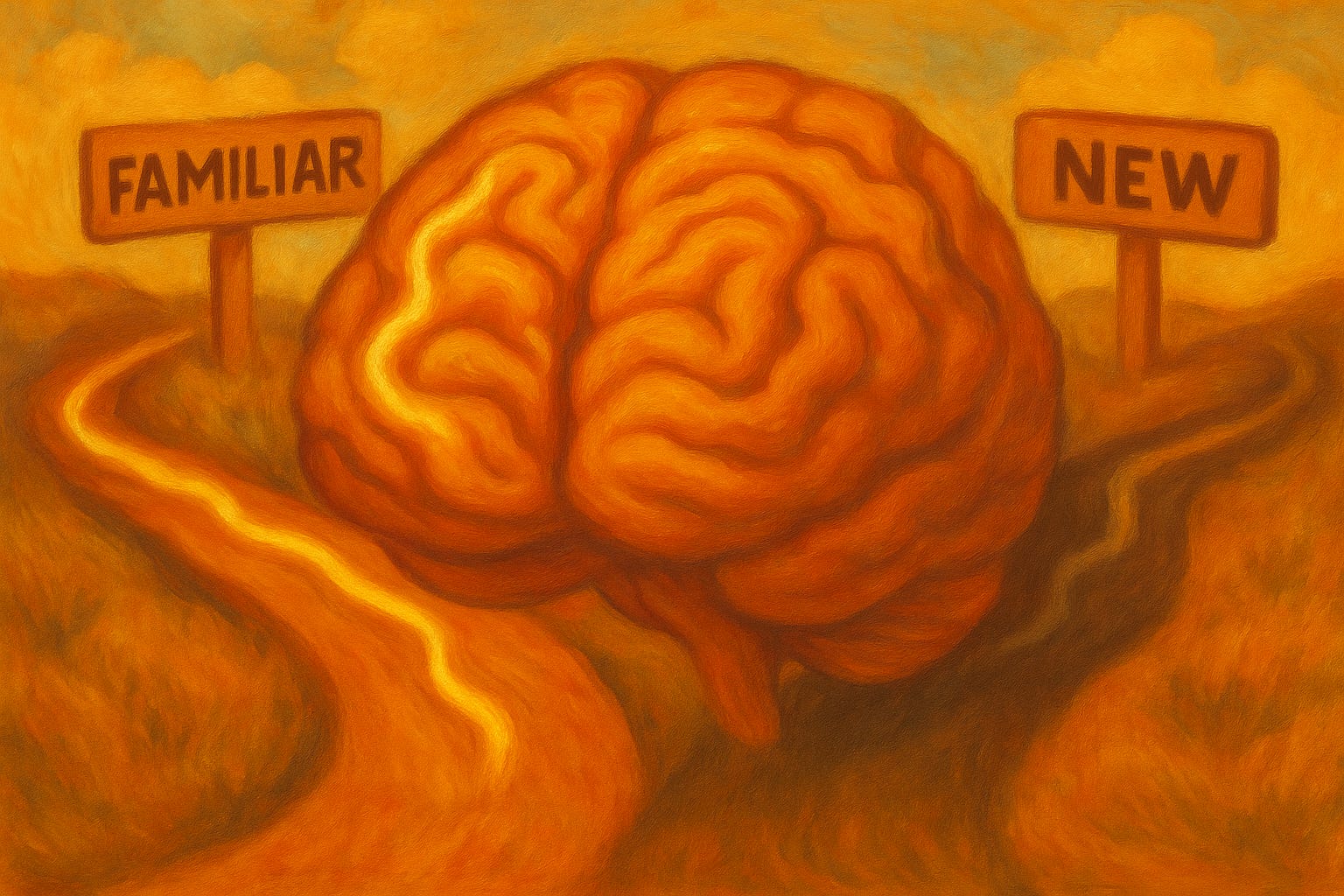
Not danger in the sense of a physical threat, but danger in the sense of “I cannot predict what will happen here, and unpredictability is expensive and risky.”
The natural response to something unpredictable and expensive? Avoid it. Create barriers against it.
This is where our motivation problems begin.
Say you want to go to the gym first thing in the morning. Your brain only sees friction and danger. It’s used to you turning over in bed, lifting your phone from the nightstand, scrolling Instagram. This new initiative you’re contemplating sounds scary. Get dressed? Head out? Go to the gym? That’s not the safe, familiar sequence it’s been trained on.
Your brain has built elaborate predictions around your current patterns, even when those patterns don’t serve you. It knows exactly what happens when you have your usual breakfast, stay a little longer in bed, eat at your normal times. It can predict the entire sequence with high accuracy. No surprises, no energy required, no uncertainty to manage.
That familiarity feels safe, even when the results aren’t what you want.
When you contemplate doing something different - even something beneficial that will serve you - your brain detects what’s called a prediction error: a mismatch between what it expects and what you’re proposing. That mismatch feels uncomfortable. There’s a sense of “wrongness” or unease.
You interpret this as “not feeling ready” or “lacking motivation.” But what you’re actually feeling is your brain’s alarm system trying to protect you from unexpected friction.
“Just have the muffin.”
“You can start Monday.”
“You’re too tired today.”
These aren’t thoughts that reflect your true desires or values. They’re your brain’s attempt to minimize prediction error and return you to familiar territory where it can predict outcomes accurately.
Now imagine you’ve tried diets before or attempted going to the gym early and it didn’t go well. That compounds the problem.
You think: “I’m going to start eating better tomorrow.”
Immediately, your brain searches its archives for relevant past experiences, looking for patterns that match this scenario so it can predict what happens next.
What does it find? Every other time you tried to change your eating. The restriction. The deprivation. The fighting through cravings. The eventual breaking point. The shame afterward. The weight coming back with a little bit extra. The feeling of failure.
Your brain logs all of this as data and creates an association: “Attempting to change eating patterns leads to discomfort, maybe followed by failure, probably followed by emotional pain.”
Cue the protective response: Let’s have a muffin instead! It’s safe, predictable, comforting, and delicious.
You’re not lazy. You don’t lack character. This is learned protective behavior based on legitimate past experiences your brain is trying to prevent you from repeating.
We’ve established that motivation doesn’t just appear out of nowhere. If anything, every time you try to do something new or hard, your brain will work against you to prevent it.
Not exactly encouraging, I know. But understanding this changes everything. The first step to changing this pattern is realizing that you don’t need to wait for motivation. You need to start creating it by working with your brain, not against it.
The Motivation Myth
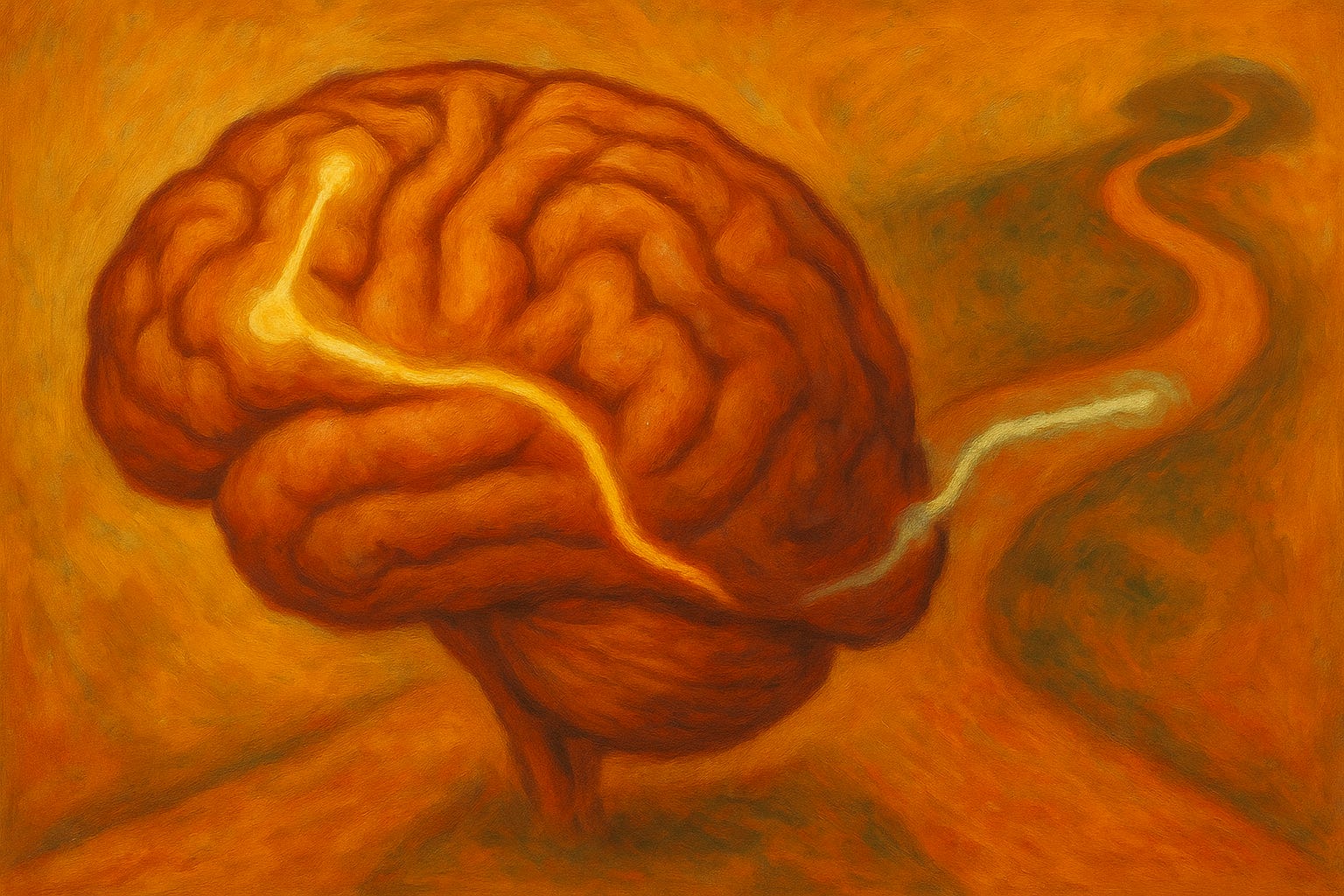
We’ve learned to believe this logic: Feel motivated → Take action → Get results.
We wait for that spark, that surge of energy and commitment that will carry us through the discomfort.
But it never comes. Because that’s not how it works.
Motivation isn’t the fuel that makes action possible. Motivation is the result of successful action, not the cause of it.
Here’s the actual sequence: You overcome that uneasy feeling of resistance. You ate the healthier meal. You went to the gym. You started that walk, even for just five minutes. Success. You feel progress, accomplishment.
Your brain responds: You took action → Your brain releases dopamine in response to the small success → That dopamine creates the feeling we call motivation → You’re more likely to take the action again.
Dopamine, the neurotransmitter linked with motivation and reward, doesn’t spike in anticipation of difficult new behaviors. It spikes after you’ve done them and experienced a sense of progress or accomplishment.
When you go for that walk even though you don’t feel like it, and you enjoy that “me time” or notice you have more energy or feel clearer-headed afterward, your brain releases dopamine. That dopamine reinforces the behavior and makes you more inclined to do it again.
The motivation to walk grows from having walked, not before it.
This is known as the behavioral activation loop: Action creates a dopamine reward, which generates motivation, which makes future action more likely.
Studies in behavioral psychology demonstrate this again and again. When people take action before they feel motivated - even small actions - their mood improves and their persistence increases. We literally decide we’re motivated because we see ourselves acting, not the other way around.
So when you wait for motivation to strike before you act, you’re waiting for your phone to charge before you plug it in.
You have to initiate the cycle through action. The motivation will follow, but not before.
How to Create Motivation on Demand
Understanding this changes what you’re asking of yourself.
You’re not trying to generate enough willpower to overcome your brain’s resistance. You’re not trying to want it badly enough that motivation appears.
You’re learning to recognize when your brain’s prediction system is running old programming that doesn’t help you - and choosing to act anyway. Not because the discomfort goes away, but because you understand what the discomfort actually is.
It’s not danger. It’s not a sign something’s wrong. It’s not evidence you’re not ready.
It’s your brain encountering prediction error because you’re doing something new.
Every time you act despite that discomfort, you create new data. Your brain logs the experience: “We did this thing and nothing bad happened.” Or even better: “Something great happened.” The prediction gets updated.
Do it enough times, and your brain reclassifies the new behavior from “threat” to “familiar” to “normal.” The neurons that fire together start wiring together. The synaptic connections strengthen. What felt effortful and uncomfortable becomes increasingly automatic.
This is literal neuroplasticity - your brain physically changing its structure and function in response to a repeated experience.
But you cannot skip the uncomfortable part. That discomfort is the signal that your brain is updating its predictions, rewiring its patterns, building new neural pathways. The discomfort isn’t a problem to solve before you start. It’s evidence that the rewiring is happening.
Practical Ways to Work With Your Brain (Not Against It)
Here’s how to put all of this into practice:
1. Just Do It: Action Creates New Neural Pathways
The most powerful way to build motivation isn’t to think about it - it’s to act. Every time you take an action, even a small one, you’re sending new data to your brain.
When you consistently choose the new, healthier action - eating that planned meal, heading out for a walk - you establish a new pattern. What was once unpredictable and resisted becomes more predictable, easier, and encounters less resistance. You’re literally building new neural pathways, making the desired behavior the “path of least resistance” over time.
The more you do it, the more your brain anticipates it, and the less fight it puts up. That’s why going to the gym for the 40th time doesn’t feel as hard as the first 10 times. That’s the literal meaning of creating a “habit.”
2. Start Micro: Something Is Better Than Nothing
When motivation is at zero, the thought of a full workout or elaborate meal prep feels overwhelming. Don’t aim for perfect. Aim for progress, no matter how small.
Even a minuscule step - putting on your workout clothes, drinking a glass of water, walking to your mailbox and back - starts showing your brain: “This is safe. This is just something we do.”
This micro-action creates a new, positive prediction. Your brain logs: “We went, we did, it was okay (or even good).” By wiring these small, successful experiences into your brain, you reduce future resistance. It lowers the barrier to entry and makes it easier for your brain to allow you to do more later, because it’s no longer a huge, scary unknown.
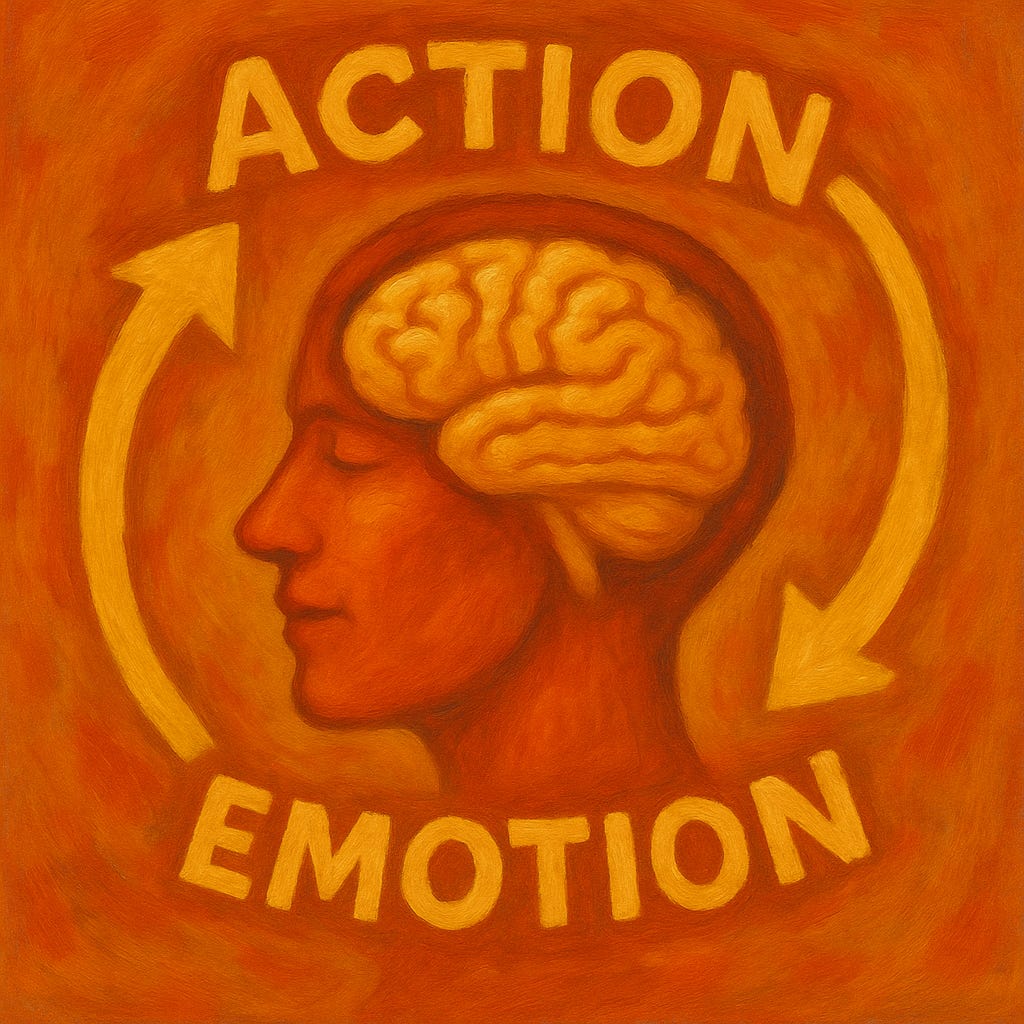
3. Motion Changes Emotion: Act Your Way Into Feeling It
We tend to think the brain tells the body what to do - that our thoughts and feelings determine our actions.
But research shows the relationship flows both ways. Our physical actions, our posture, even our facial expressions send signals back to the brain that shape how we think and feel.
You’ve experienced this. Force yourself to smile in a difficult mood, and you often feel slightly better. Stand up straight, and you feel more confident. Go for a walk while anxious, and the anxiety lessens.
Your body can teach your brain what to feel.
The same principle applies to identity and behavior change. You don’t wait until you feel like a person who eats well and exercises. You eat well and exercise first, and gradually, your brain updates its model of who you are.
Every time you make a choice aligned with your desired identity - choosing the protein-rich breakfast, going to the gym, drinking the water - your brain integrates that action into your self-concept.
Over time, “I’m acting like a healthy person” becomes “I am a healthy person.” The evidence of your actions reshapes your identity from the bottom up.
Research on habit formation found it takes an average of 66 days for a new behavior to become automatic. That’s roughly how long it takes for your brain to fully rewire - for the behavior to move from requiring conscious effort to becoming automatic.
But here’s the crucial part: Those 66 days are going to feel uncomfortable. That’s not a sign you’re doing it wrong. That’s your brain in the construction phase, building new neural infrastructure.
The discomfort is a biological marker of growth, not failure.
4. Reframe Discomfort: Growth, Not Danger
When you try something new, your brain detects prediction error and registers it as discomfort, unease, or resistance. You interpret this as “lack of motivation.”
But here’s the reframe: This discomfort isn’t a sign of danger or failure. It’s a sign of growth.
Your brain is literally rewiring itself. Those uncomfortable feelings are biological markers of new neural pathways being built. Instead of stopping when you feel resistance, recognize it for what it is: your brain updating its predictions.
Your brain codes discomfort and danger the same way. Both trigger the “make this stop” response. But one protects you from actual harm (touching a hot stove), and the other just protects you from growth.
Real danger requires you to stop. Discomfort is your brain telling you something is unfamiliar and unpredictable. Not dangerous. Just new.
The awkwardness at the gym because you’re a beginner? Discomfort, not danger.
The urge to emotionally eat when stressed, and the uncomfortable feeling of not acting on it? Discomfort, not danger.
When you wait to feel ready, you’re waiting for that discomfort signal to disappear. But it won’t disappear until after you’ve done the thing enough times that your brain has reclassified the behavior as safe.
You cannot wait your way out of discomfort. You have to move through it.
5. Cultivate Willingness: Act on Values, Not Feelings
True motivation isn’t about wanting to do the hard thing. It’s about being willing to do it even when you don’t want to.
Willingness means acknowledging the discomfort - the desire to stay in bed, the craving for the unhealthy option - and choosing to act in alignment with your deeper values anyway.
This isn’t about forcing yourself or beating yourself into submission. It’s about recognizing your brain’s protective instincts and making a conscious choice to move forward anyway.
When you feel the pull to stay in bed instead of going to the gym, willingness means acknowledging that pull and getting up anyway.
When you feel the urge to order takeout instead of eating what you planned, willingness means recognizing the urge and following through anyway.
Each time you choose action over avoidance, you interrupt the old, unhelpful patterns. You train your brain that discomfort doesn’t have to lead to escape. This builds internal trust and reinforces that you’re the kind of person who follows through on what matters, regardless of fleeting feelings.
When you practice willingness - staying present with discomfort instead of immediately escaping it - you’re training your prefrontal cortex to stay engaged even when the alarm bells are ringing.
You’re interrupting the automatic avoidance loop. Instead of: Discomfort → Escape → Relief → Strengthened avoidance pattern, you’re creating: Discomfort → Stay present → Nothing bad happens → Weakened alarm response.
Through gradual, repeated exposure to something your brain has classified as threatening, you teach it that it’s actually safe. Your brain learns that discomfort isn’t dangerous.
6. Notice and Amplify the Good: Train Your Brain to Want More
Your brain is wired with a negativity bias - it naturally focuses more on threats and problems than on positives. But you can actively counteract this by deliberately noticing what feels good about the action you’re taking.
When you go for that walk, pay attention to the positives: the wind in your hair, the music you’re enjoying, how your body feels strong and capable, the mental clarity that comes from movement, the satisfaction of keeping your promise to yourself.
This isn’t just feel-good thinking - it’s neuroscience. When you consciously focus on the rewarding aspects of an experience, you’re enhancing the dopamine signal your brain receives. You’re essentially telling your brain: “Pay attention to this. This matters. This is good.”
The more you train your attention to notice what’s enjoyable about the new behavior, the stronger the reward signal becomes. Your brain starts to anticipate those positive feelings, which makes it easier to initiate the behavior next time.
Think of it as building a highlight reel. Each time you act, notice at least one thing that felt good, satisfying, or enjoyable - even if it’s small. Over time, your brain builds a library of positive predictions around that behavior, rather than just the old negative ones.
7. Create Irresistible Pairings: Give Your Brain Something to Look Forward To
This strategy is called temptation bundling, and it’s brilliantly simple: pair something you need to do with something you genuinely want to do.
Only listen to your favorite podcast during your walk. Only watch that new Netflix series while on the treadmill. Only enjoy your special fancy coffee when you wake up early to start the day.
What you’re doing is creating competing predictions in your brain. Yes, part of your brain is saying “Going for a walk is uncertain and effortful.” But now another part is saying “But we get to listen to that thriller audiobook we’re obsessed with, and we only allow ourselves to listen during walks.”
Suddenly your brain has a positive prediction fighting against the resistance. You’re not just overcoming friction - you’re adding pull.
The key is to be strict about the pairing. The tempting activity should only happen during the behavior you’re trying to build. This creates a genuine incentive that your brain recognizes and responds to. Over time, your brain starts to associate the challenging behavior with genuine pleasure, not just with willpower and effort.
You’re essentially hijacking your brain’s prediction system by giving it something reliably good to anticipate. The “should” behavior becomes linked with a “want” experience, making the entire action more appealing.
Over to You. What This Looks Like Tomorrow Morning
Tomorrow, you’re going to wake up and your brain will offer you all the familiar reasons to wait. You’re tired. Work will be stressful. The weekend would be better. You need a better plan first.
Instead of listening, try this:
Notice those thoughts. See them for what they are - your prediction machine running old programming.
Choose one small action. Not an overhaul. One thing that moves you toward who you want to be.
Ask yourself: “Am I willing to feel uncomfortable while I do this?”
If the answer is yes, do it. Not because you want to. Not because you feel motivated. Because you’re willing to experience the discomfort in service of something that matters.
Feel whatever comes up. The resistance, the doubt, the urge to stop. Let it all be there. Don’t try to make it go away. Just notice it and keep moving.
Then do it again the next day.
This is how you rewire your brain. This is how motivation gets built. This is how you become someone who doesn’t wait for readiness.
You don’t need more information. You don’t need a perfect plan. You don’t need to feel differently than you feel right now.
You need to be willing to move before your brain catches up to your decision.
Your brain will follow eventually. It always does. But first, you have to start.
🌸Thanks for reading! I’m building this space for women who want the knowledge and inspiration for healthy, sustainable and sane weight loss, for life.
💭Tell me in the comments what clicked for you in this post or topics you’d love to read more about.
💌Forward this post to someone who needs some inspiration and support on their journey.

Very recognizable. How come the brain does want to go back to old “bad” habits even after years of new “good” behaviour?